

Putting price before product: the 9 steps to successful innovation
Behind every successful innovation lies a comprehensive monetization strategy.
For most companies, new products are a commercial necessity in an era of increased price pressure and competition. Companies understand that innovation, together with globalization, is crucial to survival and growth, and spending on R&D has never been so high. But with some two-thirds of new products missing their profit targets, or failing altogether, something is going seriously wrong.
Through our experience across hundreds of cases, we’ve traced the root of failure time and again back to a seemingly small but fatal flaw in the product development process: pricing is often completely ignored or factored in much too late.
Building a product around price through a comprehensive monetization strategy is crucial to successful innovation – the key to growth and survival for modern companies. Here’s how:
1. Have the “willingness-to-pay” talk early in the product development process.
Knowing you’re building something customers are willing to pay for must form the very basis of product design, and gaining this knowledge is perhaps the most important step in the development process. Given its importance, it’s surprising 80% of companies we’ve surveyed don’t do this – or, instead, do it when it’s too late.
When we first had the willingness-to-pay talk with Porsche on the development of their first-ever SUV, the Cayenne, there were two important questions that needed to be addressed: “Does an SUV fit with Porsche?” And “Is the willingness to pay for an SUV from Porsche higher than, for instance, one from BMW or Mercedes? With that, Porsche could determine it was onto a winner and had the confidence to invest fully in the project. A decade after its launch in 2003, the success of the Cayenne allowed Porsche to turnaround its decline in sales, pay down its debt, and generate the highest profit per car in the automobile industry.
“Knowing that you’re building something customers are willing to pay for must form the very basis of product design.”
When doing the willingness-to-pay talk, two things should be investigated and analyzed. One is what is the willingness to pay for the overall product or service? And what is the willingness to pay for major parts or features of the product or service? The first question helps to establish whether the willingness to pay may be too low and whether you should kill the project and move on. The second helps you to better design the product around what customers actually want or need.
2. Don’t force a one-size-fits-all solution
What we’ve learnt over many projects is the importance of segmenting a new product during the design and development process is normally grossly underestimated. We very often hear from companies, “let’s start with the product first, get it into the market, and then we can do segmentation.” That predicates on the assumption you must start with an average product for an average customer. However, we find this simple mantra often rings true – one size fits none. Your customers are not homogenous so your product and pricing shouldn’t be either. Rather than build one product for the entire market, package and bundle your offering according to your different segments.
3. Product configuration and branding is more science than art.
There is one important principle to keep in mind here, and that is avoiding “killers”. Killers are the features within a product or service that only a few potential customers really value, while there is a significant percentage of people for whom this feature has no value – and, sometimes, even a negative value.
A typical example is four-wheel-drive. For some people, it’s very important to have this feature in their brand-new SUV, but for the majority it’s not. Why include something that’s going to add significant cost and drive up prices, but which most of your customers don’t want?
4. Choose the right pricing and revenue model.
In the early 2000s, Michelin invented a new truck tire that, impressively, would last 20% longer than any other tire on the market. The CEO was very happy with this development and naturally asked his sales team, “How much more can we charge for this new product?” The answer was, to his disappointment, somewhere around 5-6% more – a typical rate of monetization. This would have serious consequences for Michelin’s bottom line given new Michelin tires would need to be replaced 20% less.
Michelin’s executives then decided to revisit the company’s long-established monetization model. They found by switching from a price-per-tire to price-per-kilometer model, a classic pay-as-you-go approach enabled through GPS technology, 100% of the additional value from their innovation could be monetized – and they went on to gain the biggest profits in the industry.
"How you charge is often much more important than how much you charge."
There are many different monetization models available, particularly in the current digital age. But no matter which model you select, it’s important to consider the monetization model early on in the design and development process, as how you charge is often much more important than how much you charge.
5. Develop your pricing strategy.
There are just three basic strategies when it comes to picking a winning pricing strategy: penetration, maximization, and skimming. Make a conscious decision regarding the pricing strategy for your company and, once you do that, ensure your top management is aligned on the strategy and goals – so often they’re not.
6. Draft your business case and go from hoping to knowing.
Having seen hundreds of business cases, our observation is that 80% of these are useless – they only show what someone wants to see and are not a true analysis. To see whether your business case makes sense, first ask the question: Does it include price or value elasticity? This means if your price goes up for whatever reason, then automatically sales will go down. The second question is: Does it consider competitive reactions, for instance, war gaming aspects? Without this, your business case will only tell you what you want to hear, which may be far from the market reality.
7. Communicate the value of your offering clearly.
This step takes us from the monetization of a product to its marketing. To ensure the full value of a product is communicated, do not leave the communications plan to the communications team alone. They have not been a part of the innovation process, they do not necessarily know what the product segments are and the value-adds, and so on. It is necessary the innovation team remains involved in the communications of the product or service so the true value of the innovation gets through to the end customer.
8. Understand your customers’ irrational side.
This steps involves fine tuning your product or service offering, taking into consideration your product segmentation and the customer in each segment. Through a smart offer design, looking at the different features or value-adds offered, you may be surprised by the positive impacts simple recalibrations can have on the bottom line – and without increasing sales volumes.
A common approach is what we call “versioning”: If you offer two products to your customer, say an entry-level version and a premium version, most customers will choose the inexpensive option. By adding a mid-range version, many more customers will select the middle or even the most expensive option, which generally translates into much more profit for the company.
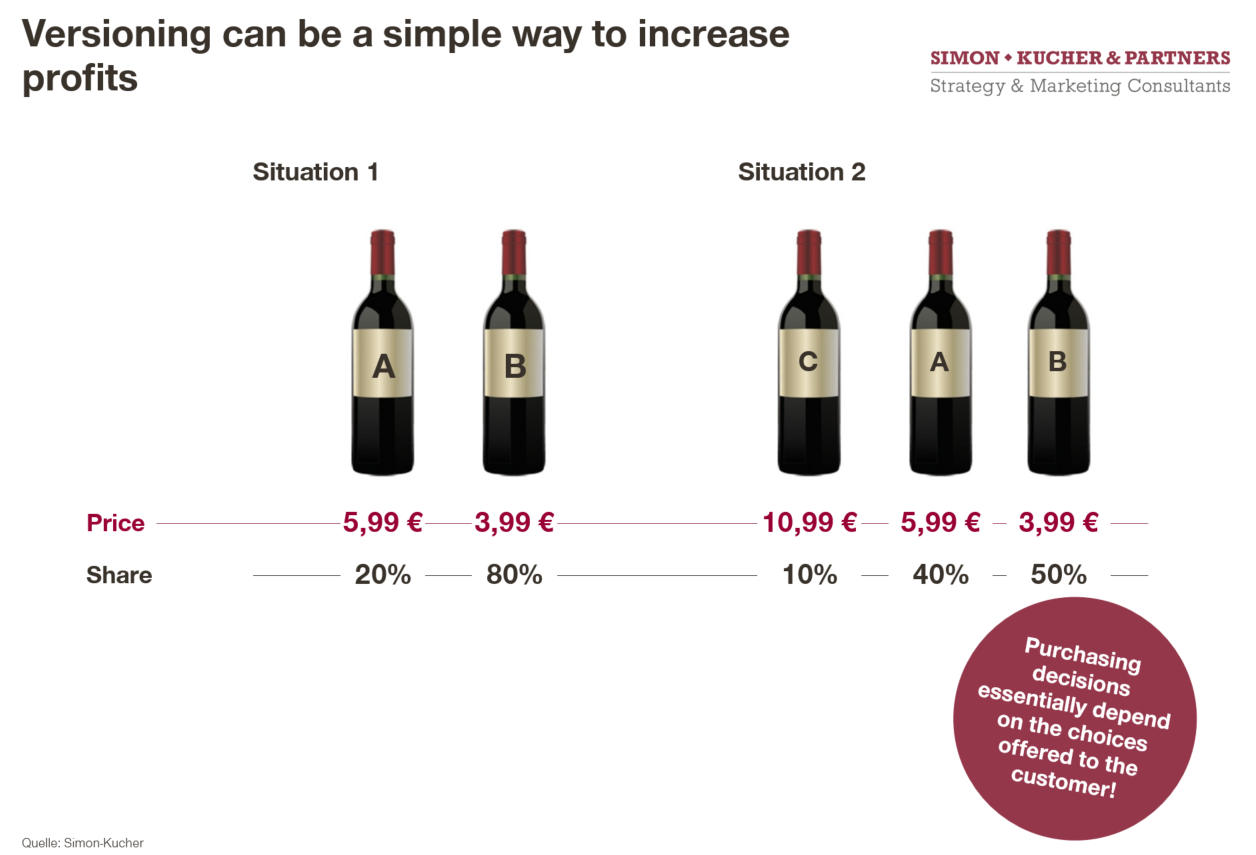
Figure 1: Understanding your customers’ irrational side.
9. Maintain your pricing integrity.
The underlying message here is that you have to prepare for competitive reactions. Competitors will react, so what are the reactions you can most likely expect? From here, think about the best counter-measures to avoid responding with kneejerk pricing reactions. And control discounting tightly. If demand for a new product is below expectation, only use price cuts as a last resort, after all other measures have been exhausted.
Getting to know your customers
Addressing monetization early on in the product development process — putting price before product — forces companies to get to know their customers better. Successful companies build products around their customers’ needs and what they’re willing to pay to meet those needs, making monetization the very basis of the innovation process.